The Busójárás, a series of festivities done in Mohács may be the most peculiar Farsang ritual. They’re supposed to scare away the winter spirits. It is so distinctive that UNESCO has designated it as an intangible cultural heritage.
Mohács, located about 200 km south of the capital, is the best-known Carnival location in Hungary. The six-day-long festival starts on 27th February and ends on 4th March in 2025.
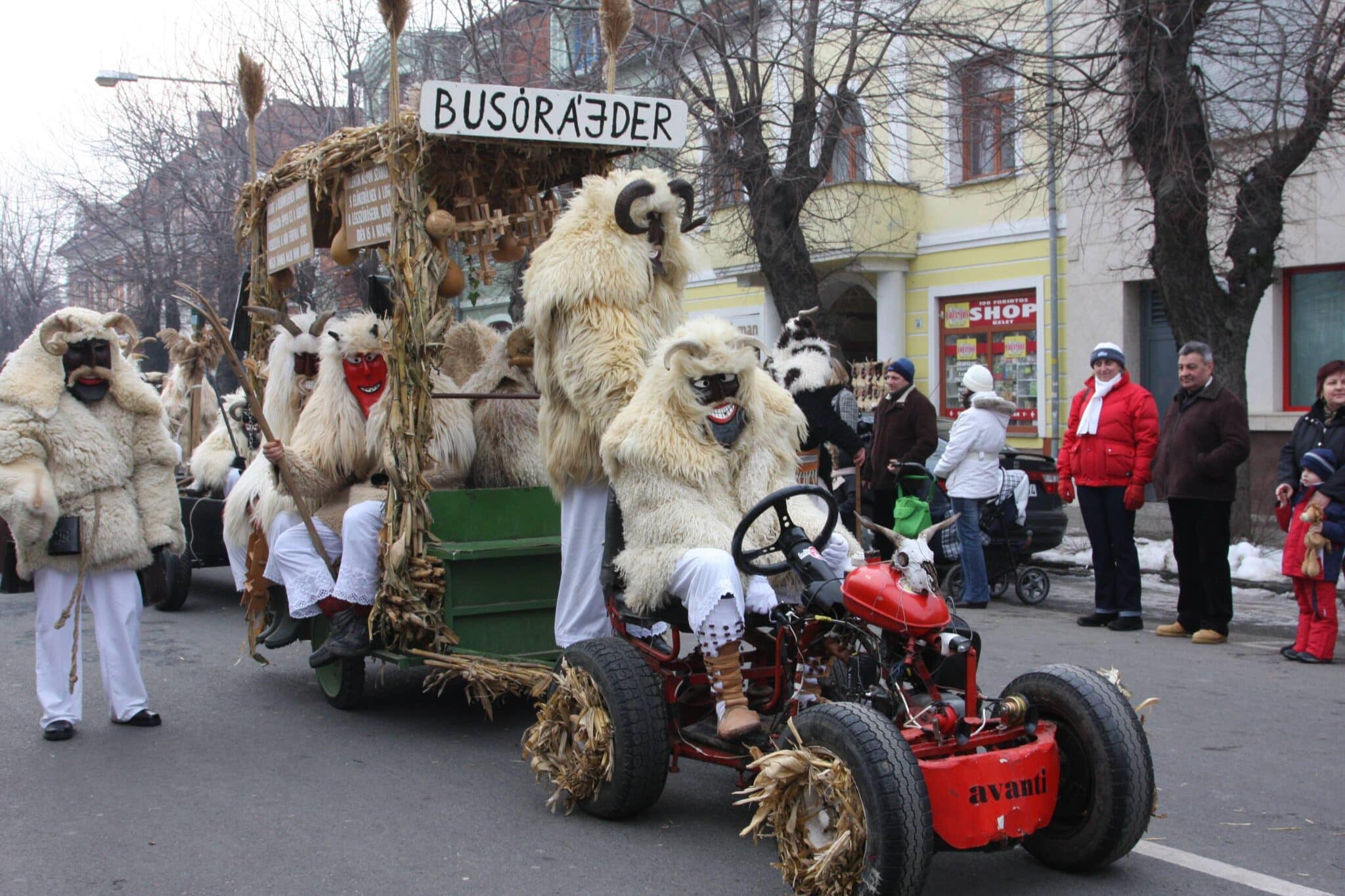
Hundreds of masqueraders and buskers will bid farewell to winter. The time of the Busó march is determined by the first full moon after the spring solstice.
The whole programme is designed to showcase the flavours and traditions of Mohács, with a programme of numerous guest speakers. Food tastings, buso face carving, workshop visits, a buso parade and bonfire lighting will add colour to the multi-day event.
The Busó-walking
Busójárás (Busó-walking) is a tradition of Mohács’ native South Slavic, Šokci community. It is a well-known and widely practised folk ritual for warding off winter. The Šokci people most likely took this custom with them when they came from the Balkans to live here, and it evolved into its current form here.
The core of Busójárás, according to Šokci traditions, is “poklade,” which means metamorphosis. They take this extremely seriously, t. True Busó tradition requires that one’s face and identity be disguised during the holiday, and some people even replace masks frequently to keep their identity hidden.
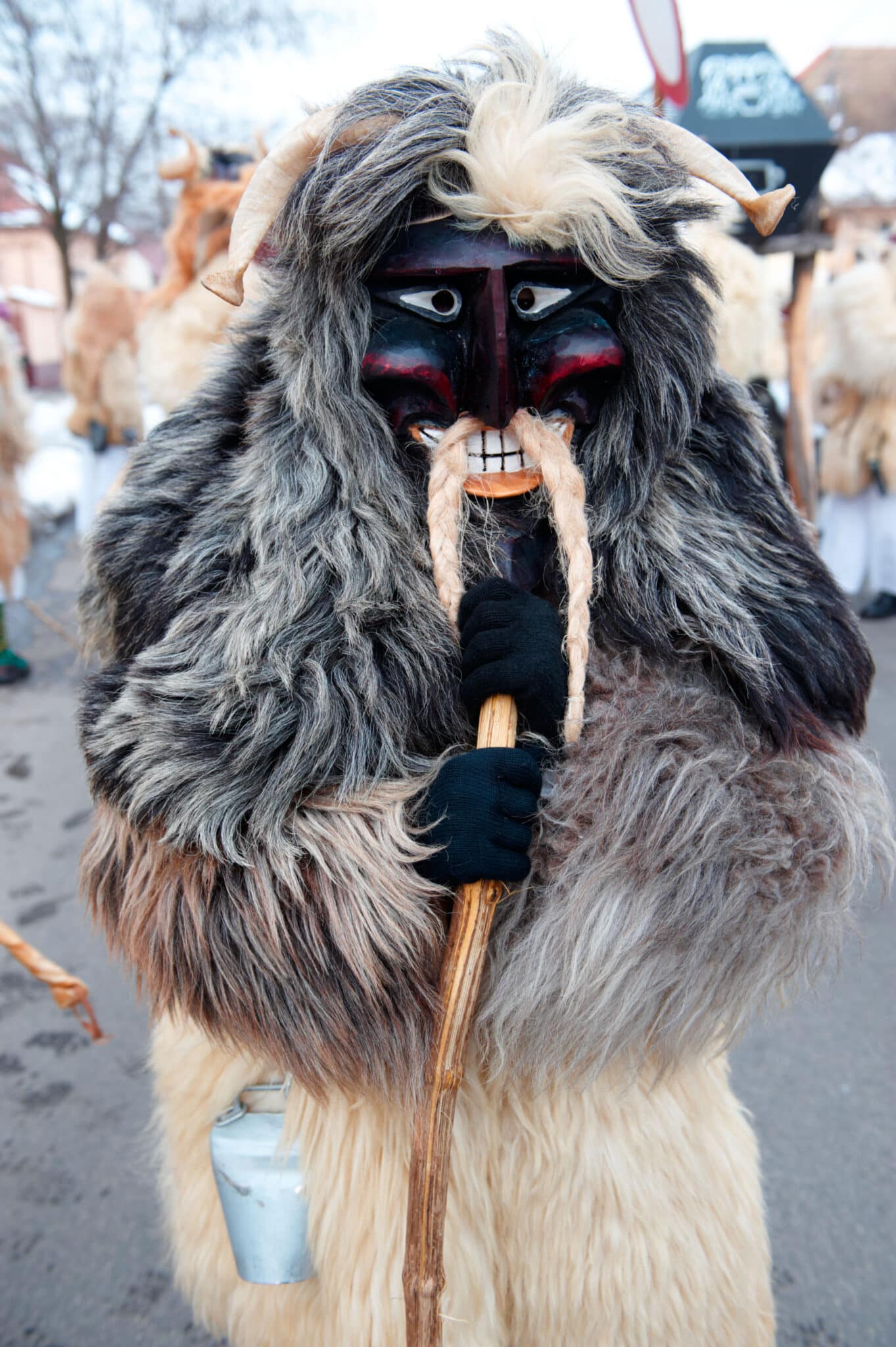
The Busó is the major figure in this holiday: he is a monster wearing a wooden mask, an inside-out fur coat, straw-stuffed trousers, and occasionally embroidered stockings called bocskors (traditional laced sandals). A chain or rope, or occasionally a belt, secures the fur coat. The Busó is also always accompanied by a cowbell, clapper, or wooden mace. Other items such as a wooden pitchfork, a washing paddle, a water carrying pole, a bull pizzle or gourds hooked to their belt are often utilised.
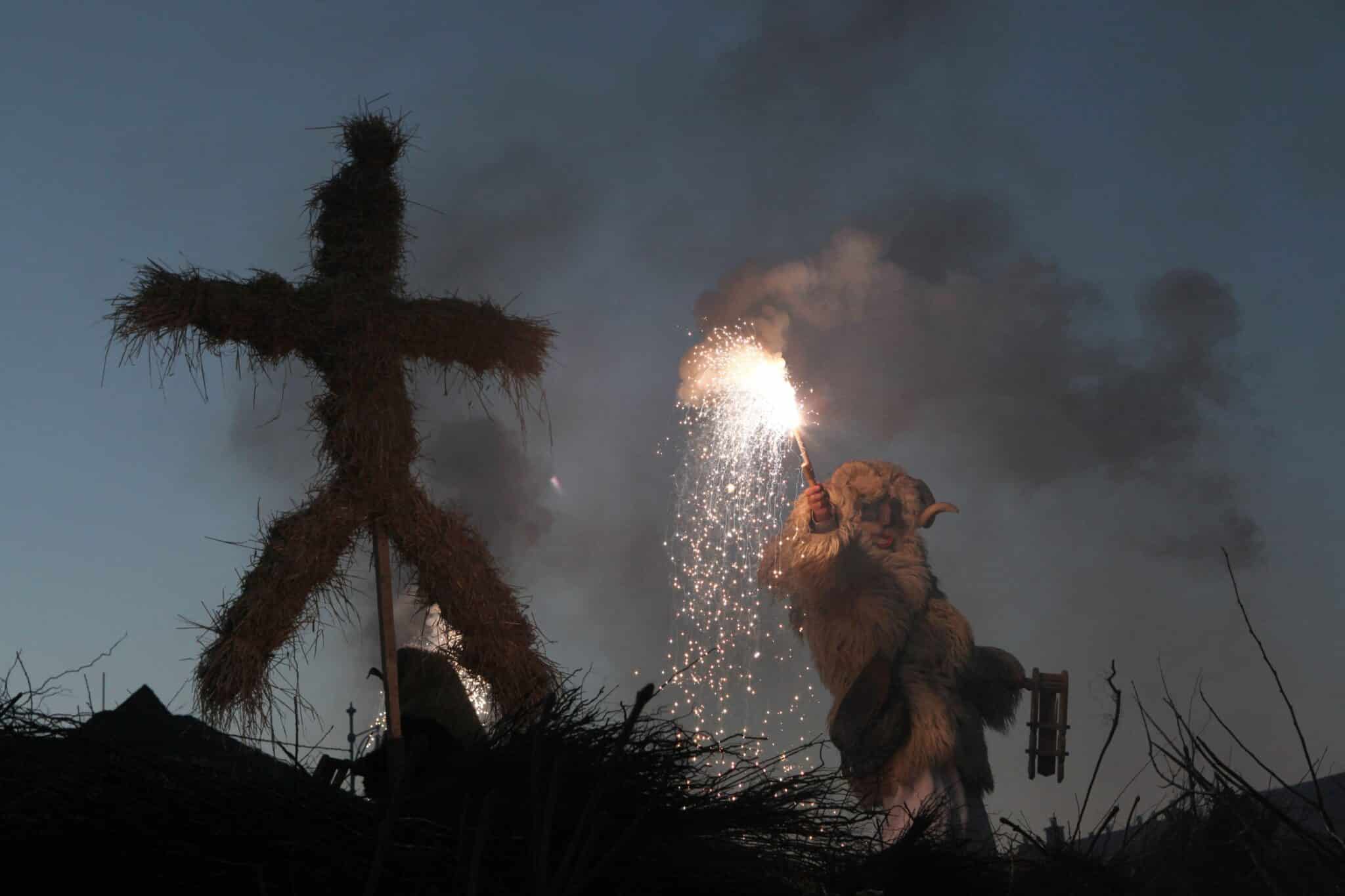
Their helpers, the ‘Jankele’, are groups of children roaming the streets, dressed in rags and wearing stockings for masks, who carry sacks filled with rags to give a playful beating to the girls. In the evening the celebrations concentrate around the huge bonfire in the main square of Mohács, where a coffin symbolizing winter is burned, while over 500 busos dance around in a circle, making an even bigger racket, just to make sure that winter will definitely not come back.
Originally, parties of Busós would walk from house to house, receiving food and drink from the residents in exchange for their good fortune wishes and winter-chasing rites. Their march has evolved into a town-wide festival.
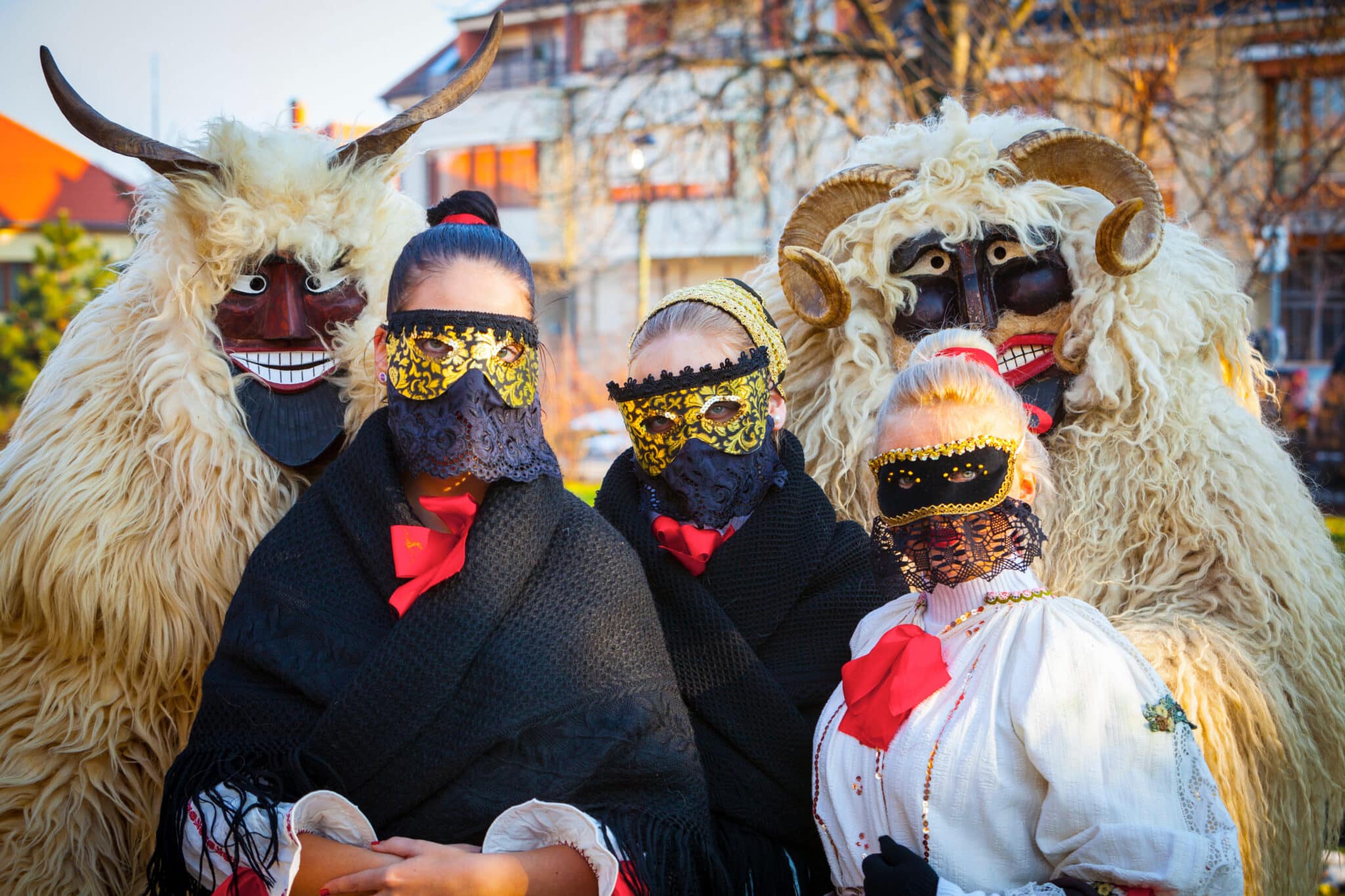
This carnival tradition is constantly shaped by the buso groups, which are still based on family ties or strong friendships. The members of each group meet regularly throughout the year to discuss preparations, costumes, parade routes. The masked busos are almost exclusively male, women are occasionally allowed but are expected to pretend they are men while wearing the costume. The children and women of the buso groups are welcome in the parade in their Croatian (Šokci) national costume. Since only a black and white cloth mask covers their faces, they are called “pretty busos.” The buso groups are in constant rivalry, trying to come up with new ways to entertain the crowds, while preserving the traditions at the same time.